Wednesday, January 27, 2010

the story of the winter I forgot how to speak


ALBUM REVIEW: Los Campesinos! - Romance Is Boring

In medias res is a Latin phrase which literally translates into "into the middle of affairs" and refers to a narrative which starts in the middle of the story and relies on flashbacks to bring the audience up to speed. As the title to the opening track on Welsh band Los Campesinos!'s third album in as many years, Romance Is Boring, it's also startlingly apt: everything - from the abrupt, difficult instrumental melody, to the brilliant first line ("but let's talk about you for a minute") and following lyrics, to the murky and unexpected middle section - feels as though we've stepped into a scene that has been going on long before our arrival. So when the joyous horns kick through the mess of swirling sound in the final minute of the song - the first arrival of a hook in the song, startling for a band notorious for cramming their albums full of them - and then lead into first single "There Are Listed Buildings," with its infectious "bah bah" chorus, it's like a beam of sunlight blasting its way through a cloud bank.

It takes repeated listens to truly appreciate how effective "In Medias Res" is as an opening track. Much like that individual song, Romance Is Boring is challenging on its first time through: the hooks are still there, but where the band dressed them up and shoved them to forefront before, here they're buried in the sound: you have to work for them. Calling this the "new" Los Campesinos! isn't exactly right - Gareth Campesinos! still crams in more words a minute than an auctioneer, and the melodies are still expertly crafted earworms. But the sound LC! has adapted for this album will certainly surprise anyone holding their breath for a followup to either of the band's first albums: the guitars are louder, more distorted, heavier, and the group sounds more willing to experiment than before - more than half of the songs play with either complicated time signatures or song structure. And while the sound isn't a huge progression, only a few of the songs - the aforementioned "There Are Listed Buildings" or the terrific, penultimate "This Is A Flag. There Is No Wind" - could easily fit in on the band's earlier efforts, and even those are more chaotic than anything in the band's admittedly frantic previous output.

As such, many fans of the band will be tempted to give up on the album almost immediately, which is a shame - as in many ways, Romance Is Boring is the band's strongest record to date. The songs are denser and nowhere near as immediately accessible, but they stand up and reward repeated listens: there's more to come back to than before, and a good number of them - "We've Got Your Back," "I Warned You: Do Not Make An Enemy Of Me," "A Heat Rash In The Shape Of The Show Me Shape," "This Is A Flag" - are among the strongest pieces of music the band has ever written. The horn and string arrangements provide the perfect counterpoint against the frenzied guitars and vocals, and further flesh out the songs. But most tellingly is how much Gareth has grown as a lyricist: whether it's comparing post-rock to a poor lover ("it feels like the build up takes forever, but you never get me off") on "Straight In At 101" or detailing the tragic mental and physical deconstruction of the protagonist in the beautiful "The Sea Is A Good Place To Think Of The Future," the lyrics feel like more than simply a gimmick - they're actually as compelling as the music, and, in many cases, the best part of the song.

With so much of the album at such a terrific height, it's a shame that when it falls, it falls hard. The main riff that runs through "Plan A" is grating to the point of being painful, and "I Just Sighed. I Just Sighed, Just So You Know," despite a great start, outstays its welcome by two minutes. But by far the worst offender is the obnoxiously dissonant "Who Fell Asleep In," which meanders on for four minutes with barely a hook or redeeming factor in sight. It's these things which keep Romance Is Boring from reaching that coveted "masterpiece" inscription, and perhaps make the album not the best place to start with the band. Nonetheless, it shows that Los Campesinos! are a band with far more ideas and capabilities than perhaps anyone gave them credit for, and the sound they have to offer here - call it "maturity," call it what you will - suggests that they have a long and varied career ahead of them. And that is the biggest triumph of all.

Track picks: "There Are Listed Buildings," "Straight In At 101," "A Heat Rash In The Shape Of The Show Me State; or, Letters From Me To Charlotte," "The Sea Is A Good Place To Think Of The Future"

Romance Is Boring score: 85

Tuesday, January 26, 2010

"Beggar's Opera": a stillborn rebirth


CONCERT REVIEW: "The Beggar's Opera: Reborn"

It's a perfect example of the "it-sounds-perfect-on-paper" syndrome: a slew of first rate rock musicians - including Irish singers and sisters Rachel and Becky Unthank, Portishead guitarist Adrian Utley, and Goldfrapp bassist Charlie Jones - all under the direction of internationally-known conductor Charles Hazlewood, whose goal - in an exclusive, one-night only concert - was to reinterpret John Gay's classic "Beggar's Opera" and to answer the question of whether the 18th century tunes which make up the work can be presented in such a way that they could have been written in this generation - to "give them back some teeth," in Hazlewood's words. Yet, by the end of the evening, the only question which remained was how, with such a novel idea and a grand congregation of talent, the whole thing could turn out to be so dreadfully and intolerably dull.

Gay's opera was the subject of pointed controversy when it was first performed in London in 1728. It presented a rather crude and unflinching portrait of the city, its characters complete with thieves, prostitutes, and corrupt upperclassmen. And rather than compose original music for the opera, Gay instead set new lyrics to already well-known tunes: folk songs and airs of the street, church hymns, and - in some cases - the as-believed untouchable music of other composers, such as George Fredrick Handel and Henry Purcell. Despite the storm that the opera created by its content, it was a unprecedented success, setting the record for the longest theatrical run at the time of its premiere; this was thanks to the fact that the general public responded not only to its moral - that the rich were every bit as corrupt as the poor, but avoided punishment due to their social status - but also the music that Gay used: songs that were as every bit familiar to them as their own family. But things have, of course, changed over the past 300 years, and, as Hazlewood pointed out at the beginning of the show, these songs which Gay used to great success in the 1700s are totally unfamiliar to the majority of today's population. So it would make sense that the time is ripe for a grand reinvention, and it would seem that Hazlewood had assembled all the correct pieces for Monday's concert.

But where the show should have been thrilling and innovative, it was instead head-scratching and - more often - frustratingly boring. Despite the vast contribution from all ends of the musical spectrum - Hazlewood (who played organ) comes from a classical background, the Unthank sisters combine modern sensibilities with traditional Irish songs, Portishead pioneered a dark, film-noir inspired sound which was later dubbed "trip-hop," and Goldfrapp combine glam rock and synthpop into their electronic, highly dancable songs - and despite the fact that the whole expenditure came across more like a jam session than anything scripted, none of the musicians' backgrounds shone through. The songs which the group performed - oddly enough for tunes which were originally jigs - were instead all almost dirge-like in quality and sound: ambience without the gorgeous harmonies, post-rock without the rock. The lack of diversity in sound was particularly perplexing in the context of today's musical era, one which has been marked by increased experimentation and in which arguments and discussions occur tenfold about the ever-increasing number of genres - meaning that there could be endless musical directions to peruse for a project such as this. Yet, nearly every song began with a drone, tempo rarely rose above 60 beats a minute, and instruments filtered in one by one, hesitantly, rarely rising to take the lead. It didn't seem to be lack of confidence on the musicians' part, but rather lack of interest: with the exception of Hazlewood, nearly everyone on stage looked as bored as the audience. The Unthanks and baritone Tim Dickinson - all of whom are talented singers - did what they could with the vocal parts, but too often the melodies demanded far more of them than they were able to offer; it didn't help that far too little time was devoted to the vocal sections, and far too much attention was given to meandering, uninventive instrumental sections which provided no interesting musical substance and left the vocalists nothing to do except sway back and forth in time with the music. To make things worse, the few times that the rhythm did pick up slightly - the closer "Greensleeves" being by far the worst offender - the concert turned into an unqualified mess, with half-baked ideas, multiple time signatures, and the sloppy, obnoxious use of a vocal looper all tumbling over each other without reason or sense: the musical equivalent of a Jackson Pollack painting, only without the contrast and the vibrance of the colors. The highlights of the evening were undoubtedly the performances of a period trio - soprano, cello, and lute - who supplied the original versions of the numbers before the larger group reworked them; but they, too, were wasted, as they were only utilized for five or six (out of the twenty-odd) songs which were performed, and never once were given the opportunity to join in with the reworkings.

The music was poor enough on its own, but it was reduced to satirical levels by everything surrounding it: Hazlewood's attempt at commentary and plot synopsis between the songs was fumbled and confusing, and the sound levels were ridiculously skewered and uneven. But the worst element were the three large screens hanging behind the performers, which alternated back and forth between sloppy close ups of the performers and crude, slapdash photos which Hazlewood attempted to describe as "modern urban London" in comparison to the London of Gay's day. But the pictures - a man in a purple dress climbing over a barrier, a person passed out on the street by a pile of his own vomit, a man with his head in a urinal - were more distracting - not to mention offensive - than anything, and were hardly the London that Gay would have been familiar with.

Hazlewood began the show by saying that the performance had been pulled together over a space of four days. It's true that great recordings have been made out of jam sessions - Miles Davis' Kind Of Blue and Talk Talk's Laughing Stock being the two standout examples - and bands such as the Dave Matthews Band and the Grateful Dead have made their name as jam bands. But all of these groups have been marked by at least one of two things: either a brilliant intersection of ideas and creativity, or a great reliance on energy. Monday's concert had neither of these: the performers were so distant from each other - both musically and personally - that they had no chemistry, no common ground to work on, and the songs were so unrelentingly downtempo that there was nothing compelling about them. In the end, "The Beggar's Opera: Reborn" became the greatest of tragedies: the type of event based on such a great idea that it could have been revolutionary. Instead, its execution was just that: a death sentence.

Concert score: 7

Sunday, January 24, 2010

extravagance beyond imagining

If there is one sure-fire method of humbling one's self, it is to pay a visit to the Buildings of Parliament at Westminster Palace. Perched on the edge of the Thames, it towers imposingly over nearly everything around it: ships on the river drift by like wood chips, double decker buses seem little more than children's playthings. And this is not to mention the way you feel, stepping out from the tube station to find, immediately ahead of you, Big Ben surging up from the pavement, the hands on its clock face inching ever towards the next moment and the tip of the spire aiming towards the cold, leaden sky. And beyond Big Ben: the sky decorated with myriad other towers and steeples, all jutting out of the vast, sprawling complex of buildings that the British government calls home. There is nothing to do for that first moment other than to halt mid-step - your foot, forgotten, trailing to a stop on its own momentum - and gaze upwards. The thought that it takes to comprehend such a thing is so massive in itself that there is no room left in your mind for anything else.

But how Parliament appears on the outside is but a small thing compared to the interior. The first, great hall - part of the original construction from 1097 and the only remaining building after fire ravaged the place in the early 1500s - is strikingly bare in its stone construction, and - as it remains without heating to do this day - cold enough to see your breath hover in the air before you; nonetheless, it in itself is the size of a cathedral. And the barrenness only serves to highlight the extravagance that is to follow. For every room, every hallway, every door and every statue throughout the rest of the building is a stunning testament to artistic passion and intricacy.

Parliament is divided into two sections: the House of Lords and the House of Commons (though, without a guide, it's all but unnavigable - Historian Ernest Law may have called the lawn maze at Henry VIII's Hampton Court "the most famous Maze in the history of the world," but Parliament is a twisting, winding mess of hallways and chambers which puts all other labyrinths to shame) and seems to be an exercise in ever-increasing excess. First comes the Queen's Robing Room, whose walls are lined with paintings and friezes of the story of King Arthur and the noble traditions of his court; the throne sits at the end of a long stretch of blue carpet and underneath a ceiling of gold. From there, you move down through a series of galleries, decorated with stirring portraits of great moments in British military history, and into the House of Lords. And what a display is that! Not a space is left uncovered: gold creeps up the walls like unchecked ivy, chandeliers descend elegantly from the ceiling, and giant windows open up the room to the outside world. And at the head of it all rests the throne - a monument of solid gold towards which the eye, like a magpie, cannot help but drift.

The credit for this incredible presentation goes to the Gothic designer Augustus W. N. Pugin, who spent thirty years designing literally everything in the palace - from the ceilings to the throne to the legs of the chairs - and who still found time to engage in other projects. It is true that the sheer amount present is overpowering at times, and, if one is in a sour mood, the excess - not to mention lack of subtlety - can be almost laughable. But it is still almost impossible not to be impressed by the attention to detail, the precision, and the technical skill so obviously apparent. One could spend an hour in every single room, pouring over every inch, every little incision, and still not even come close to discovering everything it has to offer. And after it is all over and you step back outside, with gold-tinted eyes, to the black of the asphalt and the grey of the sky, the world seems just a little drabber than before, and you feel like a groundhog who has crawled out from his hole only to find the earth still frozen in the grasp of winter.

Friday, January 22, 2010

concert review: Philharmonia Orchestra plays Mozart and Mahler

Mahler's 5th Symphony is, to be blunt, a monster. It spans five movements and clocks in at 70 minutes; its longest movement alone closes in 20 minutes and its shortest is just under 10. And it doesn't help that the symphony is the musical equivalent of a tornado: strings swirl viciously, brass roar, and the sound explodes forward, crushing everything in its path. But then, suddenly, just as tornadoes have been known to insert a straw into a glass bottle and set it down without a scratch, the piece backs off: it falls to a hush and allows moments of incredible beauty to filter through, like light through the clouds after the storm - only to take off again in a massive crescendo. For, when it comes down to it, Mahler's 5th contains more melodic phrases and ideas in its 70 minutes than most composers think of in a lifetime; it is so crammed full with them that they literally tumble over each other as if vying for attention - they interrupt mid phrase and shove each other out of the way. All of this, of course, means that a description of the piece is practically impossible without delving into a book-length analysis. It's overwhelming and exhausting, and a wonder that it's not a total mess. And it's fiendishly difficult to pull off - not only performing the entire thing without a hitch, but keeping the audience engaged for its entire length. So when it happens, it's an exhilarating, breathtaking event.

Such it was with London's Philharmonia Orchestra on Thursday night, under the direction of Finnish guest conductor Leif Segerstam. The musicians blasted through the massive symphony with an energy appropriately equal to the intensity of the music - and maintained their stamina and ardor for the entire 70 minutes. And the two highlights of the evening could not have been more different: the second movement in itself was an awe-inspiring thing, rumbling with aggression like some unrestrained animal, while the famous fourth movement - which Mahler composed as a love letter to his wife - was appropriately subdued; the interplay between the strings and the harp - a sharp contrast to the largely brass-driven movements which preceded it - was gentle but rich, delicate but lush and full of colour. It's a testament to the orchestra's caliber that their excellent performance of Mozart's Piano Concerto #20, assisted with exquisite lyricism by French pianist David Fray, and whose playful accessibility was the perfect counterpoint to the challenging and demanding Mahler, was almost completely overshadowed by the second half of the concert. What is a main course for many an orchestra was here little more than an appetizer.

It's a rare occurrence to witness a musical performance on a level such as this - where the passion of the players, the sound of the instruments, and the boldness and quality of the music itself are all uniform. And though the idiom of "it's always better live than on the record" is overused these days, it rang particularly true for Thursday night. A recording of Mahler's 5th can't explode up at you, uninhibited, fiery and colossal; it can't make you sit back in your chair, taken aback at its raw and unexpected beauty; it can't make you lean forward in its final moments, holding your breath in thrilled anticipation as it races towards its triumphant climax. This did.

Concert score: 100

Wednesday, January 20, 2010

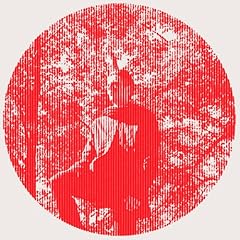
album review: Owen Pallett - Heartland


It's an odd thing, in this day and age of instant gratification, to find an album which requires patience - one which refuses to divulge all of its secrets and pleasures on a single listen. Listening to these types of releases can be like watching a flower unfold in the early days of spring: at first, it seems far from engaging, and sticking with it can be something of an endurance test. But as the days roll on - or, in this case, as the album bears repeated listens - colors begin to appear, welcoming you in: a line here, a splotch here, fading into focus like a Polaroid picture and leaving us with something beautiful.

Heartland, the new album from songwriter, keyboardist, and violinist Owen Pallett (who, up until this point, has recorded under the moniker of Final Fantasy) is such a record. Granted, "Midnight Directives" is a distinctively strange song in itself, and an even stranger one to open the album with: with its urgent vocal line, skittering percussion, and furiously racing strings, it races by almost too quickly for us to grasp ahold of, and ends without making a strong impression. But once "Keep The Dog Quiet" sneaks in with its bossa nova-inspired pizzicatto string and steadily mounts to a climax of drum rolls and brass, it becomes clear that Pallett knows what he's doing. He stumbles off course again with the brief and overdone "Mount Alpentine," but hits stride with "Red Sun No. 5" and remains remarkably consistent for the remainder of the album.

It is within these later songs that Pallett's strengths not only as a songwriter, but also as an arranger, shine. Having relied in the past on synthesizers and overdubbing his violin, Pallett here is assisted by the Czech Philharmonic, who provide a truly fitting and rich sound for his rich and often complex orchestrations; these, in turn, provide support and counterpoint for his beautiful vocal melodies, which manage to be distinctive earworms even when they shy away from a typical verse-chorus-verse-chorus format. While classical music purists may scoff, the truth is that Heartland offers songs which contain as much detail and craft as any symphony or orchestral work. The trick is just to wait and let them bloom.

Track picks: "Keep The Dog Quiet," "Lewis Takes Off His Shirt," "E Is For Estranged"

Heartland score: 83

Sunday, January 17, 2010

album review: Laura Veirs - July Flame


Portland-based singer/songwriter Laura Veirs is perhaps better associated with the punk and riot grrl movements, but you'd be forgiven for thinking otherwise after hearing her eighth release, July Flame. In place of electric guitars, there are acoustic; in place of aggressively played instruments, there are hushed vocals, pianos, and piles of strings. But if the results Veirs achieves here are any indication, it's a path which the songwriter should follow more often: the title track is lovely and sublime, "Little Deschutes" - named for a river in Oregon - is a quiet, fragile waltz, "Sleeper In The Valley" moves from an understated, guitar-plucked verse to a dark, tragic chorus laced with sawing strings and church bells, and "Wide-Eyed, Legless" is built around a mercilessly catchy string riff. These are all songs which can easily be described as great, and many of the other songs are alluring and beautifully arranged, but the album as a whole never really rises above the sum of its parts: it never coalesces together into the breathtaking thing you hope it will become. But even if July Flame falls just short of being a great album, it's still one well worth tracking down.

Track picks: "July Flame," "Sleeper In The Valley," "Wide-Eyed, Legless"

July Flame score: 80

...and dancing, too

To be perfectly frank, neither I nor anyone I was with - Ethan, Jon, Courtney, Jackie - were particularly thrilled to find ourselves on the way to a Scottish dancing event. We had no one but ourselves to blame; after all, we had raised our hands when Dave Becker asked how many people were going so that he could buy tickets. But that had been almost a week prior, and circumstances had changed slightly: the five of us had just spent the entire day at the London A Cappella Festival, watching groups perform and taking part in a three hour vocal workshop with Voces8 and The Swingle Singers. In addition, the festival was on the other side of town from where we were staying, which meant that by the time we made it back on the tube, we were tired and hungry, and the debates about just what haggis really was - the main course at the Scottish dancing that night - did little to increase our enthusiasm. And it didn't help that a performance of Mozart's Requiem was taking place simultaneously at St. Martin's In The Fields. In our minds, the evening in front of us was going to be about as fun as talking to a telemarketer.

We walked into the basement of St. Columbia - a giant stone Scottish Presbyterian church - about fifteen minutes late, due to the vocal workshop and closings on the tube line, and found the place to be packed with about a hundred and fifty people - some of whom were younger, but most of whom looked to be anywhere from their late forties to their early nineties. Calling it a "basement" offers the wrong connotations, however. It was, in truth, a cavernous hall, lined with towering arches along the side and a stage at the end, which was occupied with the band: a fiddler, accordionist, pianist, and drummer. We had scarcely arrived, removed our coats, and taken a glass of wine than the dancing started. And, at first, it seemed as though our misgivings about the whole endeavor were correct. The emcee stepped on stage, announced the name of the dance, and motioned to the band to begin playing. With the exception of Rachel, who dove happily in, the Lewis & Clark students - about twelve of us total - all stood hesitantly off to the side while the rest of the occupants of the hall all plunged straight into what looked to be intricate, involved movements that involved dancing backwards and spinning each other around. At one point, Dave and Kathy attempted to slip into the line of dancers, only to find themselves completely at a loss and practically overrun by a sea of swirling red and blue kilts.

With the next dance, however, things began to turn. Rachel came bounding over, encouraging everyone to get out onto the dance floor; several older men - who, judging from watching the first five minutes, had been dancing since they were eight years old - also came over and offered their hands to the girls. And before the music began, the emcee walked through the steps of the dance slowly: step three forward, hop; step three backward, hop; take your partner's hand, step away, towards, away, towards; polka around; repeat. And, broken down like that, the complexities of the dance faded away, replaced by that sudden rush which comes when the music starts and you are suddenly swept away by the excitement and immediacy of it all. By the third dance, everyone had joined in dancing, and remained there for the majority of the night, thoroughly addicted. Four hours passed by at a rate I didn't think was possible, punctuated only by a dinner break: mashed potatoes, carrots, and haggis - which, for the record, is rich and meaty and flavorful. Then, the music began again, and we threw ourselves back into the dances - intoxicating, exhilarating. For when you are out there, in the middle of the hall, surrounded by the music and a hundred other people whooping and skipping and waltzing, it's impossible to focus on anything else. There are only your feet, and your partner's hands, and the four walls beyond, spinning around and around and around.

Friday, January 15, 2010

but by god there will be singing!


CONCERT REVIEW: The Swingle Singers

A cappella music - that which is created by means of the human voice (or other body parts) - has been around for centuries, from Gregorian chant to barbershop quartets. But recently, it seems to have been making a particular resurgence in the public eye, thanks largely to the sudden explosion of student-run a cappella groups on college campuses over the past few decades.

If there is one group who is most obviously at the forefront of this revival, it is, without doubt, the eight member, London-based Swingle Singers. Formed in Paris in 1962, the group has since released over fifty recordings, and have won five Grammy awards; although their lineup has changed completely from the original members, their quality of their sound has not diminished in the least. And as the opening night act for the first annual London A Cappella festival - the brainchild of two of the Swingles - the group demonstrated why they stand as one of the best vocal groups in the world: for to hear the Swingles perform is to witness an act of near-perfection, in terms of pitch, rhythm, and general musicianship.

The group's performance covered music from all ranges of the musical spectrum - from the Beatles to Chick Corea, from Joni Mitchell to Count Basie and Arcangelo Corelli - and the arrangements were dense and lively, filled with jazzy, dissonant chords and countermelodies. And though many of the more energetic songs - such as Gershwin's "Fascinating Rhythm" or a slick, sexy tango which closed the first half - were distinct highlights, it was the slower numbers which provided the evening's greatest impact. The Swingles opened with Nick Drake's "River Man," the melody of which was perfectly suited for Sara Brimer's haunting, reverb-drenched soprano, and whose accompaniment gradually blossomed into a rich, interweaving tapestry of voices. Better yet was the astonishing cover of Icelandic singer Bjork's "Unravel," a verifiable jigsaw puzzle of jagged, beautiful harmonic fragments and echoes which gradually melted into an almost-reverential fade. When the audience applauded, it was almost tentative - as if doing so would shatter something delicate. But there was no such hesitation when the singers walked back onstage for their encore: the sound which greeted them was full, enthusiastic, and seemed to beg for them to never stop.

Concert score: 95

they shoot horses, don't they?


THEATRE REVIEW: War Horse

"War Horse," a 2007 play by Nick Stafford adapted from the children's novel by Michael Morpurgo, wants to be a lot of things. It wants to be massive and impressive, it wants to be heartwarming and touching - but, most tellingly, it wants to be important. And, in all fairness, "War Horse" will probably be looked back upon in years to come as a benchmark for what could be accomplished on the stage, in the same league as the 1812 Overture and its climatic volley of cannon fire.

The central character of "War Horse" is - surprise - a horse named Joey, who changes hands several times over the course of the two-and-a-half hour play. The story begins with Joey being bought an auction in Ireland in a rash decision by the drunkard Ted Narracott (Colin Mace), much to the chagrin of his wife (Bronagh Gallagher). Joey is left in the care of their son, Albert (Kit Harington), who nurtures and cares for the animal until he is full grown. When WWI breaks out, Ted, tempted by the promise of one hundred pounds, sells Joey to the army, where he passes through the ownership of a number of British soldiers before ending up with a German officer (Patrick O'Kane, sporting possibly the worst German accent this side of the 21st century). All the while, Albert pines away for Joey and finally decides to join the army and bring him home himself.

Credit must be given where credit is due: "War Horse" is a technical marvel. Joey and the other horses are stunningly realistic life-sized puppets, controlled by three actors whose movements and sounds are never anything less than perfect, and watching these animals move across the stage and interact with the human actors is magnetic. The play is constantly populated with other similar effects: geese and birds find their way onto the stage quite often, and lights are used to harrowing effect to illustrate asides between characters and immense battle scenes alike.

But if the direction is admirable, the writing is anything but - and it all but ruins the show. The story itself is almost impossible to buy: a boy so in love with a horse ("We'll be together forever," he whispers to Joey in one particularly eye roll-worthy scene) that he leaves home and joins the army for four years in order to bring him home. Replace the horse with, say, a girl, and you have nothing more than a typical love-knows-no-boundaries story. It doesn't help that the individual scenes are riddled with cliches and hackneyed dialogue, and the human characters never really rise above stereotypes: a naive farm boy who learns firsthand the horrors of war; his alcoholic father and harsh but well-meaning mother; a brash, foul-mouthed drill sergeant; an officer who wants nothing more than to just get back to his wife and daughter. And many of the effects, though eye-popping at first - such as the instance of an enormous tank which rolls on stage at one point - do little to advance or deepen the story, making them seem show-offy and gimmicky. Strip away the technical accomplishment of the play - or even just stand back from it - and there is little left. It's "Ben Hur" for the West End.

The play's biggest failing lies in that it asks us to place our attention in a horse - to see it as a character, as real and significant as any human. But however technically amazing he is, Joey obviously lacks anything resembling character development. He starts in fright when a gun is fired and strains when is made to plough for the first time. In short, Joey behaves exactly like any other horse, and has nothing to offer which sets him apart. The play banks on the audience sympathizing with Joey simply because he is a horse, and for no other reason. For a story so hell-bent on touching the audience's hearts, it feels cheap and half-baked.

It is true that a horrifying number of horses died in WWI: statistics vary, though some say between five and six million. But sixteen million men - more than twice that number - were killed, twenty-one million were wounded, and the world was introduced to the horrors of the trenches and chemical warfare. And in light of those sobering numbers, it's kind of difficult to care about what is, in essence, little more than a love story between a boy and a horse.

War Horse score: 30

Thursday, January 14, 2010

album/concert review: Vampire Weekend: Contra


After their entrance into the indie music world in 2007, Vampire Weekend quickly became one of the most buzzed about - and argued about - bands of the decade. Were they intelligent musicians crafting energetic, exceedingly catchy songs, or were they simply preppy New England students whose riffs and melodies stole unabashedly from Paul Simon's Graceland? It was a question that many felt would be answered by the group's second album, Contra, which arrived nearly two years to the day after the release of their debut.

But Contra is an odd album. It doesn't mark any great development or change in sound for the band (if anything, the Graceland comparisons are even more applicable here than on the debut, though the jerky, frantic guitar and the hyper-kinetic drums of single "Cousins" owe more to Drums And Wires-era XTC than anything Simon ever put to record), which means that it won't win over the so-called "haters;" at the same time, however, the songs are weaker and considerably less accessible, which means that the fans of the self-titled album - especially those with high expectations - will walk away from the album without much of a desire to return to it. Instead, Contra seems to be for those in the middle: those who consider Vampire Weekend to be fun and enjoyable, and don't hold much of an opinion any other way.

For, when it comes down to it, the majority of these songs are fine. The chorus of "White Sky" allows lead singer Ezra Koenig to leap around in his falsetto like a monkey from branch to branch, "Giving Up The Gun" rides along on a driving, incessant synth rhythm before sliding into a gradually-building bridge with a startlingly beautiful melody, and "I Think Ur A Contra" closes the album with a mix of late-night pianos and thumping tribal percussion. But the songs rarely ever rise above just fine, and the tracks which fall beneath that mark - "Taxi Ride," with its frustratingly sparse and uninventive instrumentation, and "Run," whose instrumental chorus contains a synth line most 80s bands wouldn't even go near - are almost embarrassingly weak.

As part of a kick-off for releasing the new album, the band gave a brief, free outdoor concert at London's Somerset Hall, performing on a column-lined balcony overlooking an ice-skating rink and a courtyard crammed full of fans, many of whom had learned about the concert through word of mouth. The band tore through a ten-song setlist with admirable abandon and energy, making sure to play a number of highlights from their debut in addition to tracks from Contra. Unfortunately, though, it was a show that was plagued with problems: firstly, the band came on thirty minutes late, to the displeasure of many of the spectators left standing in the cold. The already-unnessecarry autotune on "California English" was exaggerated to almost exasperating levels. And halfway through "Horchata," the second-to-last song, the speakers in the courtyard failed completely, leaving the band to blast the sound as loud as possible from the balcony for closer "Walcott." Nonetheless, the band made up for most of the shortcomings with their zeal and their performance, making for a relatively engaging forty minutes. And much like their new album, the show confirmed what their debut suggested: that Vampire Weekend are fun, diverting, and not much more than that.

Track picks: "Cousins," "Giving Up The Gun"

Contra score: 65
Concert score: 70

Wednesday, January 13, 2010

But London! Was there ever such a city!

Try to imagine, if you will, a place in which everything you could ever want, have ever desired, is spread out in front of you, through a tangle of snow-laced streets and a dark and dripping, but efficient subway system. Imagine that, through the myriad buildings which form this place - many of which were erected long before the German Blitzkrieg decimated much of the city - you find, just by walking through a door, on a whim, access to concerts, theatre productions, films, museums, libraries, access to which often costs, perhaps, ten pounds or fewer. Imagine grocery stores where store brand curry costs nine pence a can and seven chicken drumsticks from the poultry section cost a pound fifty. Imagine a city where, when people brush past you or bump into your shoulder, actually turn around to face you and call out a quick, "Sorry!"

Such is London. And the joys are so great that one feels practically guilty thinking about the lows: the fact that the wind, when it blows, is deadly cold and enough to freeze the ears right off your head; or the fact that the hot water in our dorm was broken for the first three days of our stay, meaning that showers were reduced to huddling outside the stall and sticking our fingers in the freezing spray, hoping, wishing, praying that the temperature would rise enough that stepping inside would not result in hypothermia.

Funnily enough, the blessing of London is actually its largest curse: that there is so much - too much - to do, to see, to experience. There are over a hundred different theatre performances per week here, and just as many - if not more - concerts. And even for us - students, with a program designed to give us more free time than we will ever have again in our lives - mapping out what to do is often an agonizing decision. An introduction to Scottish dancing or a performance of the Mozart Requiem? Vivaldi's Four Seasons at St. Martin's In The Fields or Phoenix? Avenue Q or Cirque du Soleil? Do I sacrifice sixty pounds to see Ennio Morricone in concert, conducting his most famous film scores? Or twenty pounds to hear Handel's Messiah performed on Good Friday by the Royal Choral Society? We've not even been in London for a week, and we've already been to see a fantastic Tom Stoppard play - "Every Good Boy Deserves Favour" - and to hear the phenomenal a cappella group The Swingle Singers perform. Tomorrow night we're going to see "War Horse," a massive, three-hour, award-winning play in the West End. And we're just getting started.

This program is most likely going to spoil us all rotten, but it's the best way to be spoiled possible. And, after all, we have this opportunity sitting in front of us. If we don't take it now, then when?